
Yonezawa Beef: GI No. 26, Raised 33 Months, and the Story of Mr Dallas
Yonezawa beef is a Kuroge wagyu brand from the Okitama region of Yamagata - the three cities of Yonezawa, Nanyo and Nagai plus the five towns of Takahata, Kawanishi, Iide, Shirataka and Oguni. It was registered as Geographical Indication (GI) No. 26 in 2017. The definition rests on three pillars: uncalved heifers only, fattening of 33 months or more, and meat quality grade 3 or above. In 2023 the age requirement was even raised from 32 to 33 months - a brand that defends its name by tightening its own rules. And the name first travelled Japan because of one cow an English teacher took back to Yokohama in 1875.
2017Geographical Indication (GI) No. 26 - uncalved Kuroge heifers, 33 months or older, meat quality grade 3 or above
The basis: the definition written into the GI registration
Yonezawa beef's claim rests not on a ranking but on a national register. The GI system registers and protects product names tied to a place and its character; Yonezawa beef entered it as No. 26 on March 3, 2017. The registration fixes the production area as Okitama's three cities and five towns, limits the cattle to uncalved Kuroge heifers, requires Okitama to be the longest and final place of rearing, and sets meat quality grade 3 or above for the carcass. The age rule was later revised upward - from 32 months to 33 months in December 2023 (Yonezawa City materials). A regional collective trademark for 'Yonezawa beef' had already been registered in March 2007.
| Item | GI registration |
|---|---|
| Registration | Geographical Indication No. 26, March 3, 2017 |
| Area | Okitama: Yonezawa, Nanyo, Nagai, Takahata, Kawanishi, Iide, Shirataka, Oguni |
| Cattle | Kuroge wagyu, uncalved heifers only |
| Fattening | 33 months or older (raised from 32 months in December 2023) |
| Carcass | Meat quality grade 3 or above |
Source: MAFF, GI Register No. 26 'Yonezawa Beef'; Yonezawa City materials (checked November 19, 2026).
Why Yonezawa beef? (The reasons)
A basin of temperature swings and clean water. Okitama is a mountain-ringed basin with large swings between day and night, summer and winter, fed by the headwaters of the Mogami River. A low-stress environment on clean water is held to underpin the beef's fine texture.
Time: long fattening. Thirty-three months or more is long even for wagyu. Slow rearing threads fine marbling through the red meat and draws out the fat's flavour and aroma. Restricting the brand to uncalved heifers keeps quality uniform.
Rules that only get stricter. As the 2023 age increase shows, Yonezawa beef revises its definition toward strictness, not convenience. Certified producers raise the cattle, and only carcasses that meet the standard may carry the name - the practice behind a name trusted for 150 years.
History: a land that did not eat beef, and the cow that changed its reputation
In feudal Yonezawa, cattle were partners in the fields, and custom forbade eating four-legged animals - beef never reached local tables. The turn came after the Meiji Restoration. In 1871, the Yonezawa domain school Kojo-kan invited Charles Henry Dallas, a British merchant, to teach English. During his stay, Dallas learned how good the local beef was.
In 1875, when his term ended and he returned to the foreign settlement in Yokohama, Dallas took with him one cow raised in Soegawa village (today's Iide Town) and served it to the settlement's foreign residents. It was a sensation: a contract followed between Yonezawa's livestock dealers and Yokohama wholesalers, and the beef began selling under the name 'Yonezawa beef'. This account is written into the MAFF GI register itself as part of the product's character. At Dallas's urging, Yonezawa's first beef restaurant also opened in the city that year. A brand born in an unusual way: cattle its homeland did not eat became its famous product through outside acclaim.
| Year | Event |
|---|---|
| Feudal era | Cattle are farm animals in Yonezawa; custom forbids eating four-legged animals, and beef is not eaten locally |
| 1871 | English teacher Charles Henry Dallas is invited to the domain school Kojo-kan |
| 1875 | Leaving for Yokohama, Dallas takes one Soegawa-raised cow, serves it in the foreign settlement to acclaim; contracts follow and sales begin as 'Yonezawa beef'. Yonezawa's first beef restaurant opens the same year |
| March 2007 | Regional collective trademark 'Yonezawa beef' registered |
| March 3, 2017 | Registered as Geographical Indication No. 26 |
| December 2023 | Age requirement raised from 32 to 33 months |
Sources: MAFF, GI Register No. 26 'Yonezawa Beef' (including the Dallas account); Yonezawa City and Yonezawa Beef Brand Promotion Council materials (checked November 19, 2026).
Season, how to choose, how to eat
Season. Beef has no season, but winter - sukiyaki season - is when it is enjoyed most.
Choosing. Look for the GI mark and certified sellers. When buying by mail order, check that the production area (Okitama) and grade are stated.
Eating. Sukiyaki, shabu-shabu and steak are the classics. The fat is sweet, so in sukiyaki a brief dip in the warishita broth keeps the meat's aroma front and centre.
The taste
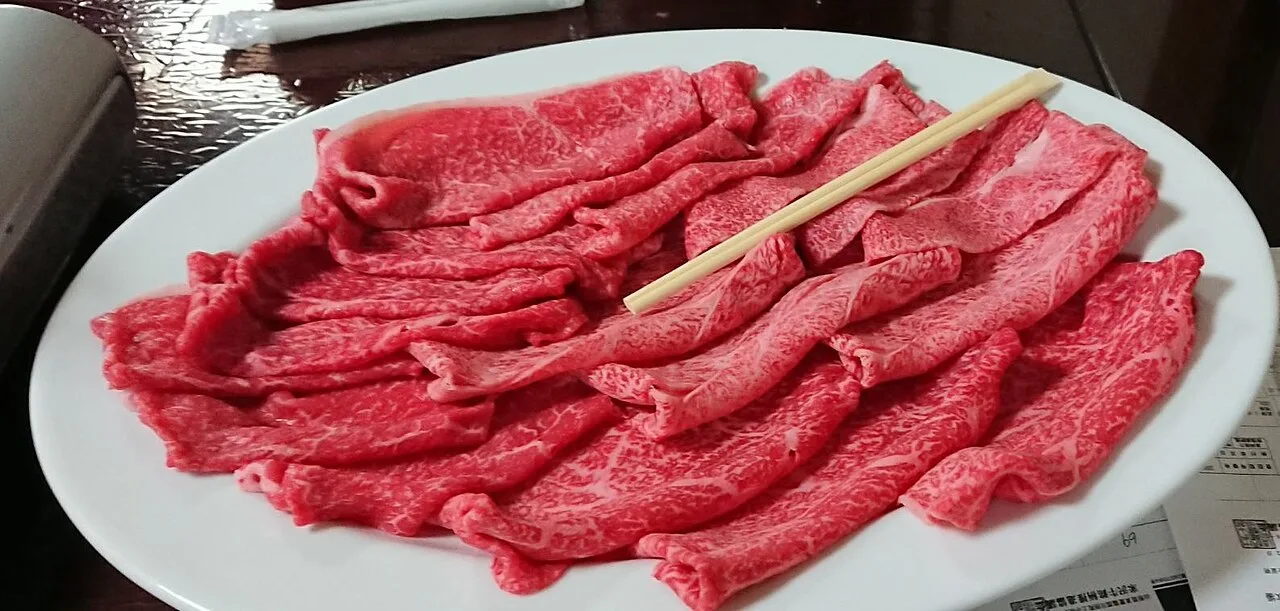
Yonezawa beef balances fine marbling and melting, sweet fat against the savour of red meat. Long fattening lets the fat dissolve on the tongue while the aroma lingers. It is not marbling for its own sake - the more you chew, the more the red meat speaks. That balance is why old sukiyaki houses have served it for generations.
Buy: order it to your home
If you cannot travel to the source, mail order is the practical option. Producers from the region sell processed and frozen products on Rakuten Ichiba. Popular items sell out in season, so check early.
* The shopping links on this page are currently plain links; this site receives no referral fee (they will be replaced with affiliate links once partnerships are in place). Please check prices and stock on the destination page.
Furusato Nozei: receive it as a hometown-tax gift
Japan's Furusato Nozei system lets taxpayers donate to a municipality and receive a local specialty as a thank-you gift, with most of the donation deducted from their taxes. Yonezawa's specialties are available as gifts. Search the portal by the municipality name to find them. (The system is for taxpayers in Japan; our detailed guide is in Japanese.)
* Furusato Nozei is a donation, not a purchase. Deduction limits and procedures apply.
Eat there: taste it at the source
Yonezawa City keeps sukiyaki and steak houses dating back to the Meiji era. Popular ones fill up on weekends - book ahead.
* PR (advertising): The Hot Pepper Gourmet link is an affiliate link via ValueCommerce. The partnership is currently under review, so a referral fee may not be paid until it is approved; after approval, this site receives a referral fee when a reservation is completed. The Ikyu.com Restaurant link is a plain link. These services are primarily in Japanese.
Travel there: book the trip
To taste the specialty of Yonezawa at the source, these Japanese booking services cover the journey as well: Shinkansen-and-hotel packages, domestic air tours, and train ticket booking. In peak season both the town and the trains fill up, so plan ahead.
 AirTrip: domestic tours in Japan
 NAVITIME Travel: Shinkansen & express train tickets

* PR (advertising): The travel links above are affiliate links via A8.net. This site receives a referral fee when a booking is completed. Please check prices, availability and terms on the destination site. These booking services are in Japanese.