
Kagoshima Kurobuta: Berkshire Only, Sweet-Potato Feed, and a Comeback from 1.6%
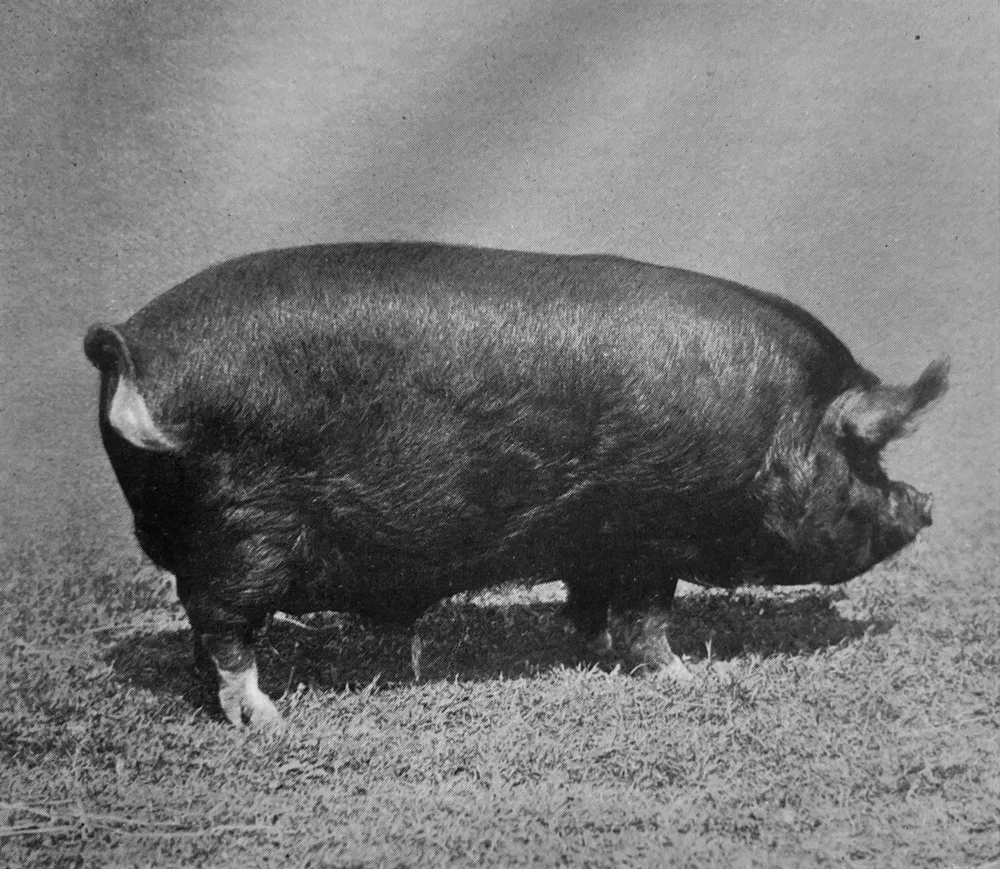
Kagoshima's black pigs are Berkshires, known by the 'six whites' (roppaku) - white at the snout, the four feet and the tail tip. The brand 'Kagoshima kurobuta' is strictly defined by the producers' association: Berkshire breed only, raised in the prefecture by association members, and fed a sweet-potato diet for 60 days or more in late fattening. Black pigs are slow and costly to raise, and in the shift to white pigs they fell to just 1.6% of Kagoshima's pig shipments in 1975. The prefecture and its farmers refused to let them vanish - and rebuilt them into a brand.
Brand rulesPrefectural brand 'Kagoshima Kurobuta' - revived after black pigs fell to 1.6% of shipments in 1975
The basis: the association's rules define the genuine article
The authority behind Kagoshima kurobuta is the rulebook of the Kagoshima Black Pig Producers' Association: (1) purebred Berkshire only (excluding American Berkshire), (2) produced and fattened in Kagoshima Prefecture by association members, (3) a diet containing 10-20% sweet potato for at least 60 days in late fattening, and (4) shipping at roughly 230-270 days of age. Genuine product carries a 'Kagoshima Kurobuta certificate', and the name was trademarked in 1999. The prefecture's brand materials explain the taste mechanism: the sweet-potato feed raises the melting point of the fat, increasing its sweetness and umami.
| Item | The rules |
|---|---|
| Breed | Purebred Berkshire only (American Berkshire excluded) |
| Production | Association members, produced and fattened within Kagoshima Prefecture |
| Feed | 10-20% sweet potato in the diet for 60+ days in late fattening |
| Shipping | Around 230-270 days of age |
| Assurance | Kagoshima Kurobuta certificates issued; name trademarked in 1999 |
| Looks | The 'six whites': four feet, snout and tail tip in white |
Source: Kagoshima Prefecture and Kagoshima Black Pig Producers' Association materials (checked November 19, 2026).
Why black pork? (The reasons)
The Berkshire's meat. Berkshires are known for fine-grained meat and sweet fat. They farrow fewer piglets and grow slowly - fattening takes roughly 1.2 to 1.5 times longer than white pigs - making them the 'inefficient' pig. They survived because the taste difference was worth defending.
Sweet-potato feed. Kagoshima is sweet-potato country. Feeding sweet potato in late fattening raises the fat's melting point, the prefecture's brand materials say, so it does not cling in the mouth and tastes sweeter and richer. The brand is engineered around the quality of its fat.
Prefecture-led breeding. The Kagoshima Prefectural Livestock Experiment Station has kept up Berkshire line breeding - rare in Japan - producing the Satsuma line in 1982, then New Satsuma (1991), Satsuma 2001 (2001) and Kuro Satsuma 2015 (2015). Decades of selection underpin the flavour.
History: from Ryukyu pigs to the edge of disappearance - and back
Kagoshima's pig history is old: prefectural accounts say Shimazu Iehisa brought pigs from the Ryukyu Kingdom (today's Okinawa) about 400 years ago. In the Meiji era, crossing with Berkshires imported from Britain improved the stock, and the black pig became Kagoshima's face. In the 1950s-60s, black pigs shipped to Tokyo's Shibaura market won a reputation that sparked a 'black pork boom'.
From the late 1960s, though, farmers switched to white pigs - more piglets, faster growth. Labour-intensive black pigs collapsed, and by 1975 they were just 1.6% of the prefecture's pig shipments. Kagoshima had decided on a black-pig revival policy in 1974; the experiment station's line breeding and the organising of producers followed. The Kagoshima Black Pig Producers' Association was founded in 1990, and 'Kagoshima kurobuta' was trademarked in 1999. A pig that nearly vanished returned as the prefecture's flagship brand. Today black pigs are said to make up about 20% of the prefecture's shipments (per association members), about half of them sold as Kagoshima kurobuta.
| Year | Event |
|---|---|
| c. 400 years ago | Shimazu Iehisa is said to have brought pigs from the Ryukyu Kingdom (Kagoshima Prefecture account) |
| Meiji era | Improvement through crossing with British Berkshire pigs |
| 1950s-60s | Shipments to Tokyo's Shibaura market win fame; a 'black pork boom' follows |
| 1974 | Kagoshima Prefecture decides on a black-pig promotion policy |
| 1975 | Black pigs fall to 1.6% of the prefecture's pig shipments |
| 1982 | The prefectural station completes the 'Satsuma' breeding line (followed by New Satsuma, Satsuma 2001, Kuro Satsuma 2015) |
| 1990 | Kagoshima Black Pig Producers' Association founded |
| 1999 | 'Kagoshima Kurobuta' trademarked |
Source: Kagoshima Prefecture and Kagoshima Black Pig Producers' Association materials (checked November 19, 2026).
Season, how to choose, how to eat
Season. Pork has no season; shipments are steady all year.
Choosing. Buy at designated sellers displaying the Kagoshima Kurobuta certificate. A generic 'black pig from Kagoshima' is not the same as the brand - check the certificate and trademark.
Eating. Black pork shabu-shabu is Kagoshima's signature. For tonkatsu, try salt to taste the fat; simmered pork (tonkotsu) is another local classic. In shabu-shabu, lift the slice the moment its colour changes - overcooking lets the sweet fat escape.
The taste
Kagoshima kurobuta is fine-grained meat with fat that is sweet without clinging. Raised on sweet potato, the higher-melting-point fat melts cleanly in the mouth and leaves sweetness behind. The red meat carries deep umami too, and sliced thin for shabu-shabu the difference from white pork is unmistakable. 'Pork whose fat is the flavour' describes it exactly.
Buy: order it to your home
If you cannot travel to the source, mail order is the practical option. Producers from the region sell processed and frozen products on Rakuten Ichiba. Popular items sell out in season, so check early.
* The shopping links on this page are currently plain links; this site receives no referral fee (they will be replaced with affiliate links once partnerships are in place). Please check prices and stock on the destination page.
Furusato Nozei: receive it as a hometown-tax gift
Japan's Furusato Nozei system lets taxpayers donate to a municipality and receive a local specialty as a thank-you gift, with most of the donation deducted from their taxes. Kagoshima's specialties are available as gifts. Search the portal by the municipality name to find them. (The system is for taxpayers in Japan; our detailed guide is in Japanese.)
* Furusato Nozei is a donation, not a purchase. Deduction limits and procedures apply.
Eat there: taste it at the source
Kagoshima City (around Tenmonkan and Kagoshima-Chuo Station) gathers black pork shabu-shabu and tonkatsu restaurants. Designated sellers displaying the certificate are the sign to look for.
* PR (advertising): The Hot Pepper Gourmet link is an affiliate link via ValueCommerce. The partnership is currently under review, so a referral fee may not be paid until it is approved; after approval, this site receives a referral fee when a reservation is completed. The Ikyu.com Restaurant link is a plain link. These services are primarily in Japanese.
Travel there: book the trip
To taste the specialty of Kagoshima at the source, these Japanese booking services cover the journey as well: Shinkansen-and-hotel packages, domestic air tours, and train ticket booking. In peak season both the town and the trains fill up, so plan ahead.
 AirTrip: domestic tours in Japan
 NAVITIME Travel: Shinkansen & express train tickets

* PR (advertising): The travel links above are affiliate links via A8.net. This site receives a referral fee when a booking is completed. Please check prices, availability and terms on the destination site. These booking services are in Japanese.