
Firefly Squid: Volume in Hyogo, Quality in Toyama, and a Swarming Sea That Is a Special Natural Monument
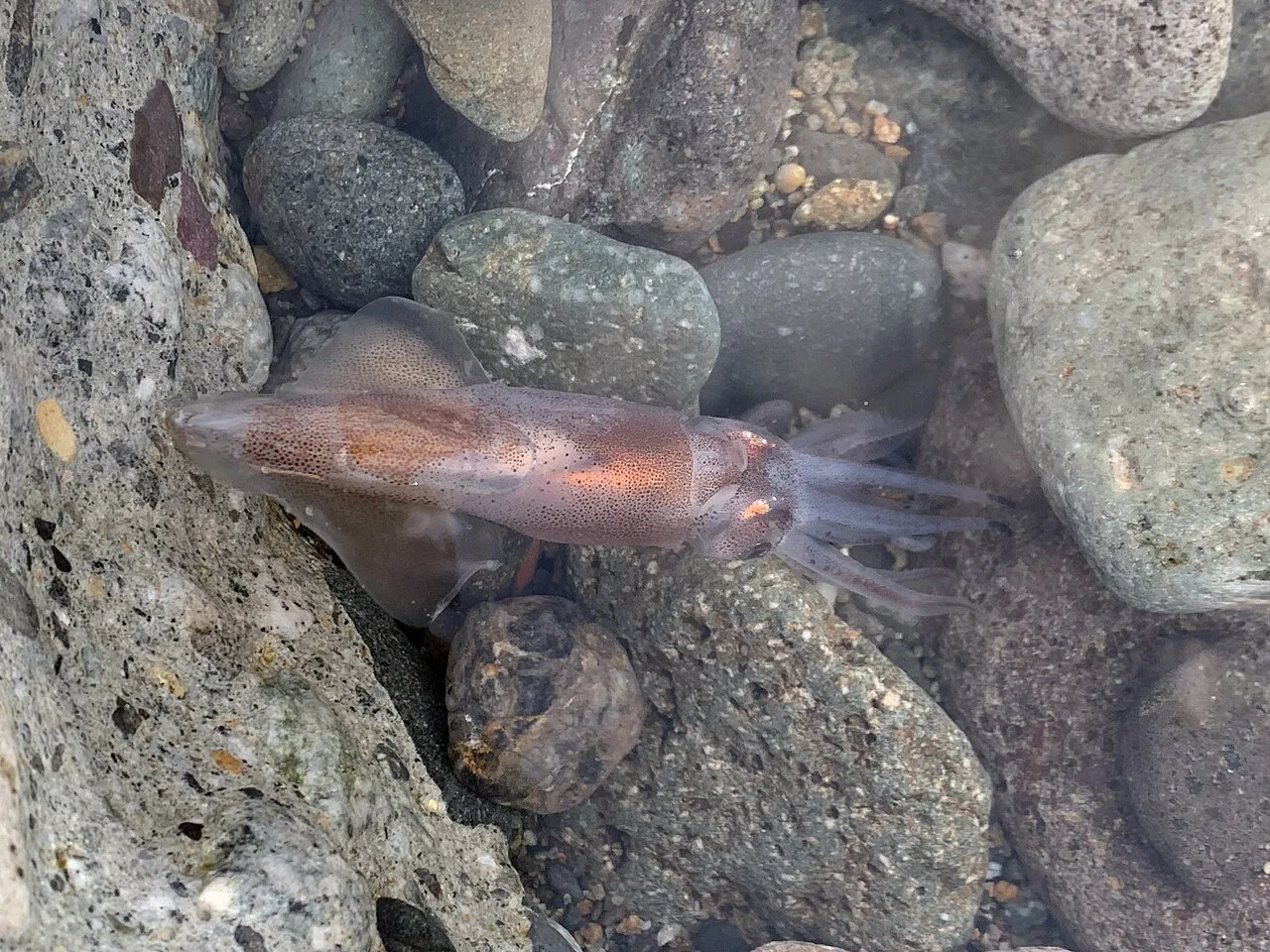
On spring nights, the shoreline of Toyama Bay glows blue. The performers are firefly squid, barely five centimetres long, pressing in from the deep to spawn - a spectacle designated a Special Natural Monument of Japan in 1952. By catch, though, the leading prefecture is Hyogo, with 58.8% of Japan's total in 2022: offshore trawlers from Hamasaka (Shin'onsen Town) supply the volume, while Toyama Bay's set nets win praise for freshness and size. 'Volume in Hyogo, quality in Toyama' - a tiny squid that announces spring.
2022Firefly squid catch: Hyogo No. 1 by prefecture (4,016 t, 58.8% of Japan) / Toyama Bay's swarming sea is a Special Natural Monument
The basis: volume in Hyogo, a cultural treasure in Toyama
In the MAFF Fisheries and Aquaculture Production Statistics for 2022, Hyogo Prefecture landed 4,016 tonnes of firefly squid - 58.8% of Japan's total, first among prefectures. The centre is Hamasaka on the Sea of Japan coast, where offshore bottom trawling sustains the volume. Firefly squid catches swing widely by year, however: Toyama ranges from a few hundred tonnes in poor years to several thousand in rich ones, and 2024 was reported as a record Toyama year. The lead changes hands - so this page cites the final 2022 figures and does not claim an every-year winner.
Toyama Bay's claim is cultural rather than numerical. The 'Firefly Squid Swarming Sea' of Toyama Bay became a Natural Monument in 1922 and was elevated to a Special Natural Monument on March 29, 1952. The designated area runs about 15 km from the left bank of the Joganji River mouth to Uozu Port, extending 1,260 metres offshore at high tide. Unusually, the designation protects not the animal but the phenomenon - a sea surface swarming and glowing.
| Item | Detail |
|---|---|
| Catch (2022) | Hyogo 4,016 t (58.8% of Japan), No. 1 by prefecture; Toyama's catch varies greatly by year |
| Toyama designation | 'Firefly Squid Swarming Sea' designated a Special Natural Monument on March 29, 1952 (Natural Monument since 1922) |
| Designated area | About 15 km from the Joganji River mouth to Uozu Port, 1,260 m offshore at high tide |
| Two fisheries | Toyama Bay: set nets (catching schools that come ashore) / Hamasaka: offshore bottom trawls (schools roaming at about 200 m depth) |
Source: MAFF, Fisheries and Aquaculture Production Statistics, 2022; Agency for Cultural Affairs and Toyama Prefecture cultural-property materials (checked November 19, 2026).
Why Toyama Bay and Hamasaka? (The reasons)
Toyama Bay drops away steeply. Within a few kilometres of shore, Toyama Bay plunges to 1,000 metres - one of the world's steepest bays. Submarine valleys called 'aigame' score its floor, so deep-sea squid can approach the beach. In spring, females about to spawn ride the upwelling of the Tsushima Current inshore and into set nets. Netted gently, they arrive unbruised and fresh - the basis of Toyama's reputation.
Hamasaka's offshore trawls. Hamasaka's fleet works the schools that roam at about 200 metres by day, with offshore bottom trawlers. The season is long - September to May - securing steady volume, and spring brings the Hamasaka Minato Firefly Squid Festival. The same squid, two fisheries: one waits for the shore, the other goes out to sea. The shape of the coast made both.
Why they glow. A firefly squid's body carries many photophores that flash blue-white when stimulated - thought to signal to companions or startle predators. The life span is about one year; after spawning, spent females sometimes wash ashore in the phenomenon called 'mi-nage' (body-throwing).
History: when a glowing sea itself became a cultural property
Toyama Bay's swarming firefly squid were a local spring tradition long before science took note. In 1922 the glowing sea was designated a Natural Monument; on March 29, 1952, after the war, it was elevated to a Special Natural Monument - the highest class of cultural-property protection. That the designated object is a phenomenon, 'the swarming sea', rather than the creature itself is exceptional among cultural properties.
Namerikawa hosts the Hotaruika Museum, said to be the world's only museum devoted to the firefly squid, explaining the glow and Toyama Bay's terrain. As food, boiled squid is the standard form: in Toyama they reach markets with the spring opening (usually March), and in Hamasaka they star in the spring festival. A guardian of a glowing sea, and a taste of spring - the firefly squid holds both faces at once.
| Year | Event |
|---|---|
| 1922 | Toyama Bay's firefly squid swarming is designated a Natural Monument |
| March 29, 1952 | Designated a Special Natural Monument as the 'Firefly Squid Swarming Sea' (about 15 km from the Joganji River mouth to Uozu Port) |
| Every Mar-Jun | Spawning brings the squid inshore; set-net fishing in Toyama Bay, and 'mi-nage' beachings in some years |
| Every spring | The Hamasaka Minato Firefly Squid Festival is held in Hamasaka |
Sources: Agency for Cultural Affairs; Toyama Prefecture; Namerikawa City; Shin'onsen Town materials (checked November 19, 2026).
Season, how to choose, how to eat
Season. Toyama Bay: March to June (the opening is usually in March), when pre-spawning females are largest. Hamasaka's offshore season runs September to May, centred on spring.
Choosing. Toyama squid are praised as larger and thicker-fleshed. For boiled squid, look for good colour and lustre and clear, black eyes.
Eating. Boiled with vinegared miso is the classic; also pickled (okizuke), tempura, or in pasta. Caution: eating firefly squid raw carries a risk of parasites (Spiruroidea larvae). If eating raw, choose only product labelled as treated by the prescribed freezing (for example -30°C for four days or more); otherwise, cook it.
The taste
The flavour of firefly squid lives in its innards - a small body packed with umami. Boiled, a gentle sweetness and a distinctive bitterness come together, lifted by vinegared miso. Toyama squid, thicker-fleshed, spread their richness as you chew. Famous for its light, this squid tastes of the concentrated spring sea as well.
Buy: order it to your home
If you cannot travel to the source, mail order is the practical option. Producers from the region sell processed and frozen products on Rakuten Ichiba. Popular items sell out in season, so check early.
* The shopping links on this page are currently plain links; this site receives no referral fee (they will be replaced with affiliate links once partnerships are in place). Please check prices and stock on the destination page.
Furusato Nozei: receive it as a hometown-tax gift
Japan's Furusato Nozei system lets taxpayers donate to a municipality and receive a local specialty as a thank-you gift, with most of the donation deducted from their taxes. Toyama & Hyogo's specialties are available as gifts. Search the portal by the municipality name to find them. (The system is for taxpayers in Japan; our detailed guide is in Japanese.)
* Furusato Nozei is a donation, not a purchase. Deduction limits and procedures apply.
Eat there: taste it at the source
In Namerikawa and Uozu, more restaurants serve firefly squid set meals and courses in spring - combine them with the Hotaruika Museum. Hamasaka's festival season is the time to aim for.
* PR (advertising): The Hot Pepper Gourmet link is an affiliate link via ValueCommerce. The partnership is currently under review, so a referral fee may not be paid until it is approved; after approval, this site receives a referral fee when a reservation is completed. The Ikyu.com Restaurant link is a plain link. These services are primarily in Japanese.
Travel there: book the trip
To taste the specialty of Toyama & Hyogo at the source, these Japanese booking services cover the journey as well: Shinkansen-and-hotel packages, domestic air tours, and train ticket booking. In peak season both the town and the trains fill up, so plan ahead.
 AirTrip: domestic tours in Japan
 NAVITIME Travel: Shinkansen & express train tickets

* PR (advertising): The travel links above are affiliate links via A8.net. This site receives a referral fee when a booking is completed. Please check prices, availability and terms on the destination site. These booking services are in Japanese.