 NAGAYAMA

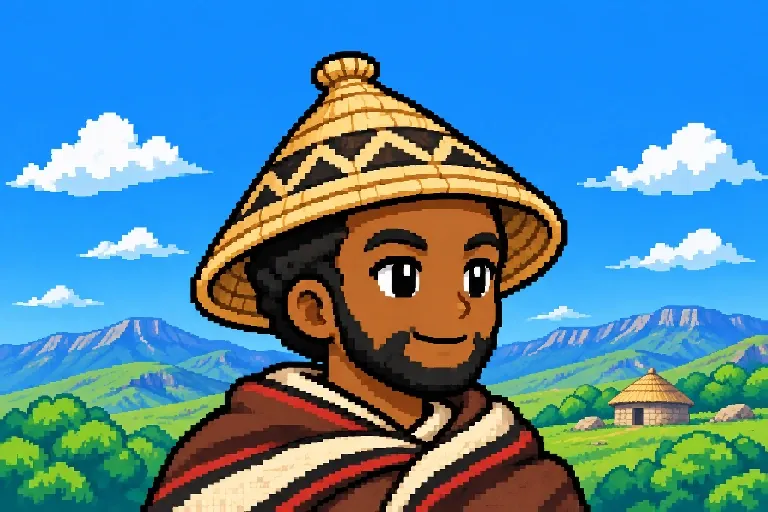
 Moshoeshoe I
The small flag beside each name marks the present-day country or region where the person grew up (and, where different, mainly worked). It does not represent the state or flag of their time.
Around 1824 a chief whose birth name meant “Dispute” led people scattered by war to Thaba-Bosiu, the Mountain of Night, and even forgave the man blamed for his grandfather’s death and lent him cattle. Do you send cattle for the road home to an enemy you drove off with rocks, write asking for peace on the night of a victory, give up land or the people’s food? You weigh the records missionaries and colonial officials left as you choose how to bind one nation together.
Art is illustrative and may differ from in-game visuals.
About this historical figure: Moshoeshoe I founded the Basotho nation, today’s Lesotho. In the upheaval of the 1820s (the Lifaqane) he gathered refugees on the plateau of Thaba-Bosiu and lent them cattle to rebuild their lives. He welcomed missionaries in 1833, fought and negotiated over land with Boer settlers, the Orange Free State and Britain, and in 1868 kept his people together under British protection.
What you can experience: Four minigames: The Village Circle (cattle-fold in the centre, the chief’s house on the highest spot), Escape by Firelight (keep the fires burning and slip people past the watch), Mafisa (match a cow to each family’s size and the season) and The Mountain Passes (roll rocks when climbers reach the stone band). Whether you take in refugees, forgive your grandfather’s killer, send cattle to a retreating army or accept the Warden Line with conditions changes later lines and opens new paths.
Historical facts and fiction: This interactive story is inspired by historical events. Dialogue, inner thoughts and alternate choices include fictional elements.
Read more: historical background
Moshoeshoe I (c. 1786–1870) died at Thaba-Bosiu on 11 March 1870 and was buried on the summit. The date of his baptism had been announced but he died before it; sources give the planned day as 12 or 13 March. His name is explained either by oral tradition (the sound of a razor shaving a beard) or by Casalis’s figurative “he shaved all his rivals”. The petition to throw “my people and my country at the feet of the Queen” was signed by his son Letsie; his own words are in the 1868 letter about resting “under the large folds of the flag of England”. Seeking British protection was a choice to save the nation, yet Britain, like the Free State, also took land. Accounts of his last years differ sharply between colonial historians and Lesotho writers.
Explore the story in the game
Learn about a historical figure, then explore their life in a free browser game with story choices.
Historical evidence and fiction
Dialogue, character motivations and some outcomes are dramatized; distinguish historical evidence from the game’s fiction.
Play the game →