 NAGAYAMA
Legitimate vs. Malicious: How to Spot a Recovery Scam
Malicious operators are extremely common in this field. The FBI's Internet Crime Complaint Center (IC3) recorded 10,516 recovery-scam complaints with about $1.4 billion in losses in its 2025 Internet Crime Report alone. The good news: legitimate services and scams behave in almost exactly opposite ways. Learn the contrast and you have a strong defense.
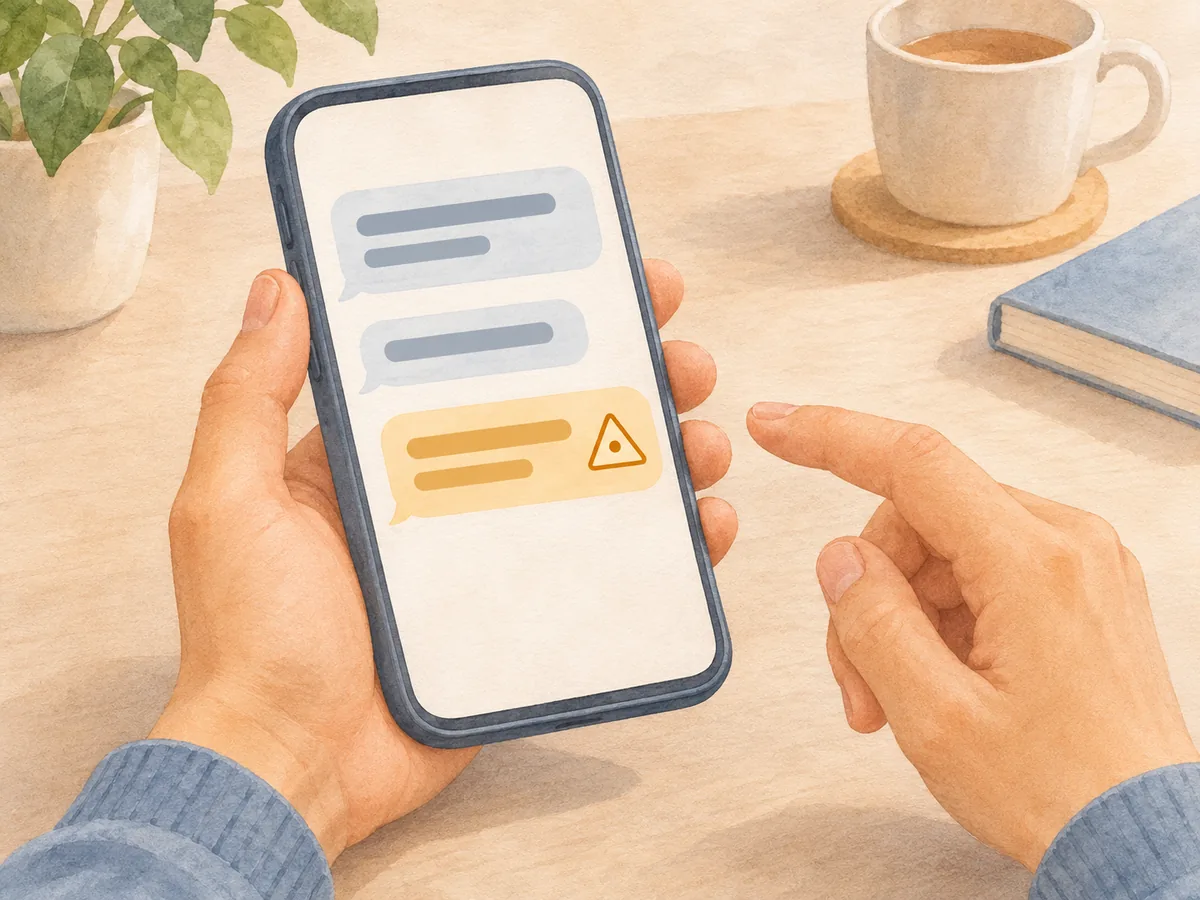
Please read this first: NAGAYAMA LAB is not a recovery company. We publish information and introduce services; we do not perform recovery work. Never send your private key, seed phrase, password, or wallet file to this site, and never type them into a form on a site you do not fully trust. Anyone who learns them can take your assets. This single rule prevents the most common loss in this field.
The contrast table
| Point | Legitimate service | Scam (red flags) |
|---|---|---|
| Fees | Success fee only (the standard is 20% of what is recovered). Zero if they fail | Demands money first — an "advance fee", "tax", "gas", or "release fee". Pay, and a new charge appears |
| First contact | You contact them through their official website | They contact you — social media DMs, replies to your posts, WhatsApp/Telegram, unexpected email |
| Seed / keys | Never asks you to type a full seed phrase into a form or chat. Data is shared minimally, after a contract | Asks for your seed phrase or private key up front, or sends you a form to enter it (it is stolen immediately) |
| Success claims | States plainly that recovery cannot be guaranteed. Published rates are conditional, around 60–80% | "100% recovery" / "guaranteed to get it back" |
| Company identity | Registration details, a real address, owners' real names and faces, genuine press coverage and reviews | No operator information, a fake address, fabricated reviews, a brand-new website |
| Contract | A written contract before work begins, including proof the wallet is yours | No contract; everything stays in anonymous chat |
| Authority claims | Openly a private company | Claims to "partner with the FBI" or be "government approved". The FBI states it does not work with private recovery firms to recover funds |
| Scope | Draws a clear line: stolen funds cannot be traced back or returned by them | Claims it can "reverse transactions" or "unfreeze exchange accounts" — technically impossible |
Common patterns
1. The second-victim approach
They reply to posts by people who lost access or were scammed, offering to "get it back". After an advance payment they vanish, or deliver a fake "report" and demand more.
2. The fake law firm
Impersonating real law firms, complete with forged letterheads and "government partner" titles. The FBI issued dedicated alerts about this pattern in June 2024 and August 2025; losses in one measured year exceeded $9.9 million.
3. The fake support page
Posing as an exchange or wallet support team and sending you to a phishing page that asks for your seed phrase. Real support will never ask for it.
4. The lookalike site
Sites and social accounts impersonating real recovery firms. Legitimate firms themselves warn that anyone contacting you under their name on social media is a fraud. Always start from the official website yourself.
5. The "release fee"
"Your assets were found — pay the tax/gas to withdraw them." If you are asked to send money before seeing verifiable proof, it is a scam.
The common thread
Every pattern ends at the same place: getting you to pay first, and pressuring you to hurry. Real recovery takes weeks to months; there is never a legitimate reason to rush you.
What the authorities say (sources)
- FBI IC3: An August 2023 public service announcement warned of the rise of companies falsely claiming to recover crypto, describing advance-fee and fake-report patterns. Further alerts on fake law firms followed in June 2024 and August 2025.
- US FTC: Defines it plainly — anyone who requires an upfront fee to recover lost money is running a scam.
- Japan Consumer Affairs Agency: Warns about "secondary victimization" in investment troubles, where victims are approached with recovery offers and charged money.
- Japan Financial Services Agency (September 1, 2026): Published a warning about frauds posing as victim-recovery services, including cases where the "helper" was part of the fraud group.
If you were defrauded, the right destinations are the police, your national consumer protection hotline (in Japan: police consultation #9110 and the Consumer Hotline 188), financial regulators, and a lawyer whose registration you can verify — not a private "refund service". And remember: "I forgot my password" and "my funds were stolen" are different problems. This guide's service introductions cover the first; public authorities are the route for the second.