 NAGAYAMA
How to buy a house in regional Japan, step by step
Ownership is open to foreigners without restriction. What takes care is the sequence: town and total budget first, inspection before contract, and the fee rules — including one that specifically affects cheap houses.
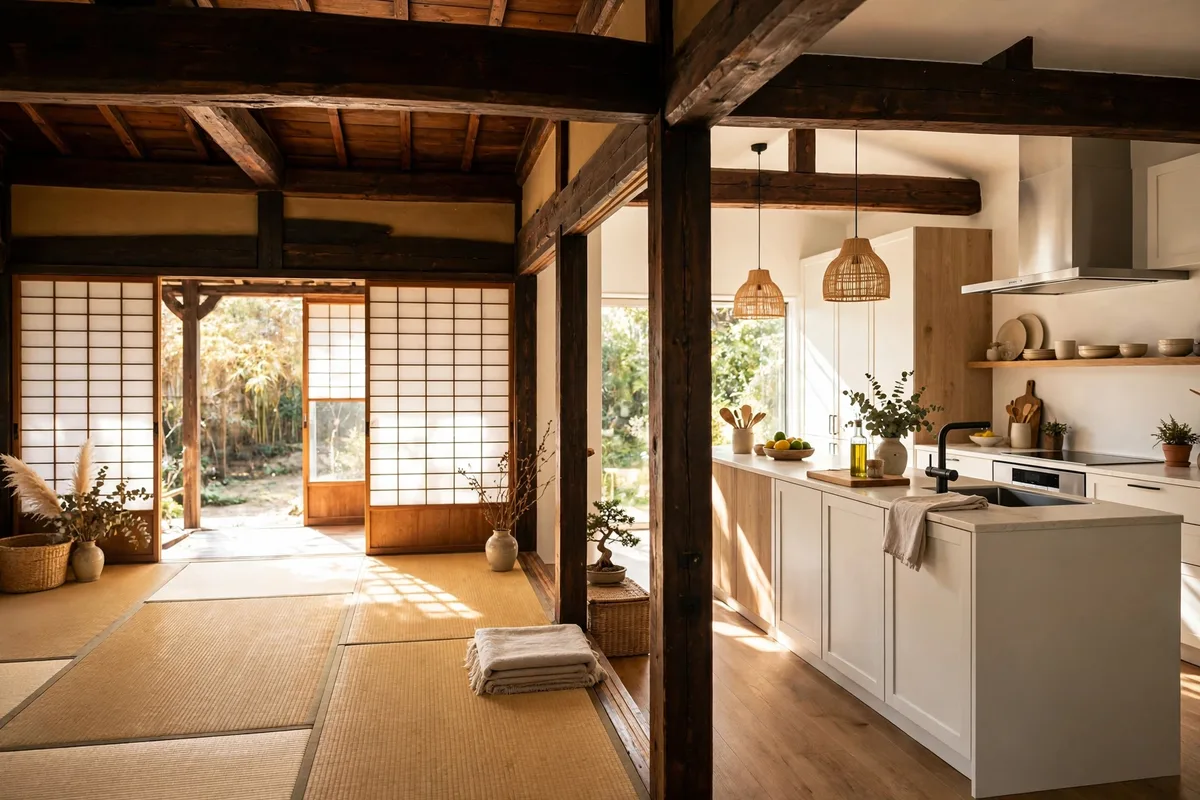
Foreigners can buy — the law is not the obstacle
Japan places no nationality, visa or residency restriction on owning land or houses: a non-resident can hold full freehold title. The real obstacles are practical — finding the house, checking it properly, and funding the purchase (most Japanese banks will not lend to non-residents, so overseas buyers usually pay cash). The process below is the standard one, with the points that matter most for cheap regional houses flagged in each step.
STEP 1Fix the town and the total budget
- WHAT
- Use the recorded medians on this site to shortlist towns, then set a total budget: price + closing costs + renovation. For a cheap house, renovation is usually the largest of the three.
- WATCH
- A ¥3 million house that needs ¥10 million of work is a ¥13 million decision. Decide the total first, then shop inside it.
STEP 2Search: akiya banks and local brokers
- WHAT
- Search the town's akiya bank and the national portal, and register with two or three local brokerages. Many rural houses are never listed online in English — local agents are the real inventory.
- WATCH
- Check the town's hazard maps (flood, landslide, tsunami) for every address before you fall for a house. City hall publishes them.
STEP 3View the house — and have it inspected
- WHAT
- Visit in person if you possibly can. Commission a home inspection (ホームインスペクション) by a licensed architect: roof, underfloor, termites, water damage, and whether the house predates the June 1981 seismic code.
- FEE
- A detached-house inspection typically costs in the tens of thousands of yen — trivial against the repair bills it can reveal.
- WATCH
- Confirm the plot fronts a public road by at least 2 metres; if it does not, the house may legally be non-rebuildable (再建築不可), which changes everything about its value.
STEP 4Offer, explanation, contract
- WHAT
- Offers and contracts run through a licensed brokerage. Before signing you receive the "important matters explanation" (重要事項説明) covering title, boundaries, hazard zones and defects known to the seller. A deposit (often 5–10%) is paid at contract.
- FEE
- Brokerage is capped by law: (price × 3% + ¥60,000) + tax for prices over ¥4 million. For homes of ¥8 million or less, a July 2024 rule lets the broker charge up to ¥300,000 + tax (¥330,000) instead — but only if the amount was explained and agreed when you signed the brokerage agreement. If a ¥330,000 fee appears without that prior explanation, ask why.
STEP 5Settlement, registration, and life after
- WHAT
- You pay the balance, and a judicial scrivener (司法書士) registers the ownership transfer — title is yours on registration. Non-residents must file a short post-purchase report under the Foreign Exchange Act within 20 days; since 5 October 2026, nationality is also declared at registration (a declaration, not a restriction).
- WATCH
- Fixed asset tax bills arrive every year. If you live overseas, appoint a tax payment manager (納税管理人) in Japan so bills and notices reach someone who can act on them.
What it costs on top of the price
| Item | How it is calculated | Notes |
|---|---|---|
| Brokerage fee | Cap: (price × 3% + ¥60,000) + 10% tax. For prices ≤ ¥8m, the 2024 special rule allows up to ¥300,000 + tax | Special rule needs prior explanation and your agreement at the brokerage contract |
| Stamp tax | On the contract document; ¥1,000–¥10,000 at current reduced rates for typical prices in this guide | Rate depends on the contract amount |
| Registration & licence tax | Standard rate 2% of the property's assessed value (固定資産税評価額) | Assessed value is usually below the purchase price; reductions apply in some cases |
| Judicial scrivener | Commonly around ¥50,000–¥150,000 | Handles the registration; practitioner range, not a regulated fee |
| Real estate acquisition tax | 3% of assessed value for homes and residential land | A deduction for homes meeting floor-area conditions often cuts this sharply; billed months later |
| Fixed asset tax (yearly) | 1.4% of assessed value, plus city planning tax up to 0.3% in urbanised areas | Every year you own the house; small houses in rural towns often mean bills in the tens of thousands of yen |
A worked example: a ¥5,000,000 house
Assume the assessed value is ¥3,500,000 (a common ratio, but it varies). Brokerage: ¥231,000 by the standard formula, or up to ¥330,000 under the special rule. Stamp tax: ¥5,000. Registration tax: about ¥70,000, plus roughly ¥100,000 for the scrivener. Acquisition tax: often ¥0–¥100,000 after the residential deduction. Total closing costs: roughly ¥410,000–¥610,000 — about 8–12% of the price — before a single yen of renovation. Budget for it, and the process holds no surprises.
登記 (tōki): the official registration of ownership — your title is complete when the transfer is registered 司法書士 (shihō shoshi): judicial scrivener, the licensed specialist who files registrations 重要事項説明: the legally required 'important matters' briefing a broker must give before contract 納税管理人: a tax payment manager in Japan who receives and handles tax notices for a non-resident owner
If you choose to buy a home in one of Japan's regional towns, we hope you will come to love Japan and take good care of the place. A house that is lived in and looked after keeps a whole street alive — for everyone who shares it.
When you are ready for a specific house
The steps above end where a guide must end: at the door of a licensed brokerage. They verify the title, the boundaries and the contract for the one house you choose — the checks that turn a cheap listing into a safe purchase.
Disclosure: this site is an information guide, not a real estate brokerage. We hold no Japanese real estate licence (宅地建物取引業), we never negotiate, mediate or handle contracts or money, and we list no properties. Links marked as introductions are ordinary links today. Japan Real Estate runs a public referral partner program (its link is issued as soon as you sign up); we plan to apply, and when a link is replaced with a referral link this notice will be updated to say so. Any purchase is contracted directly between you and the licensed brokerage.